


Trough-type Aluminum Alloy Cable Tray
A trough-type aluminum alloy cable tray is a cable laying and protection device primarily made of aluminum alloy, featuring a closed trough-shaped structural design. It is mainly used for the organized routing, protection, and management of cables in power, communication, control, and other systems. Its core characteristics combine the protective nature of a closed structure with the lightweight and corrosion-resistant properties of aluminum alloy, making it widely used in both industrial and civil construction.

Basic Structure and Material Properties
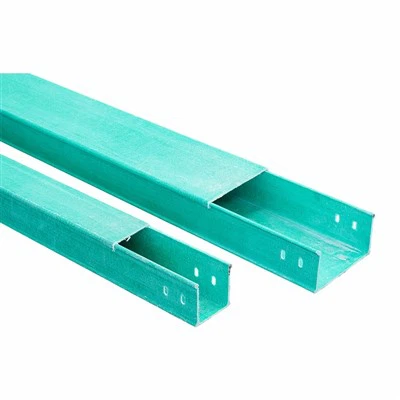
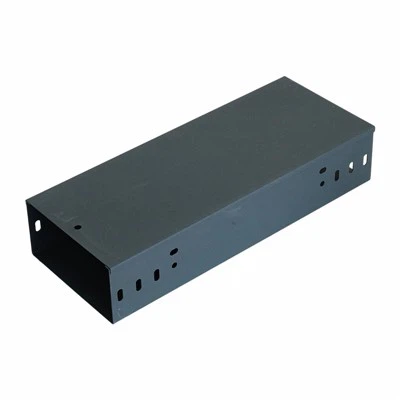
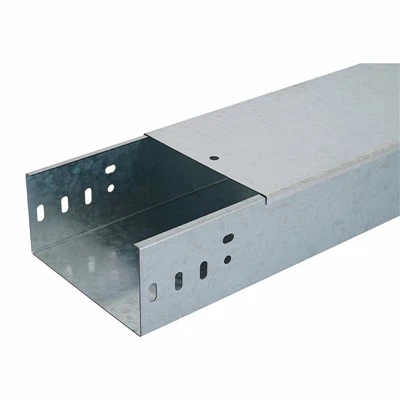
The structural body of a trough-type aluminum alloy cable tray is a fully enclosed trough (including a bottom plate and vertical sides on both sides), typically equipped with a removable cover plate, forming a complete enclosed space that can effectively isolate cables from the external environment. The material is mostly made of 6061 or 6063 series aluminum alloys (commonly used in industrial profiles), manufactured through an extrusion molding process, and possesses the following characteristics:
- Lightweight and High Strength: The density of aluminum alloy is about 1/3 that of steel. It is lightweight yet possesses sufficient strength to meet the load-bearing requirements of the tray (deflection ≤ 1/200 under conventional loads), making it especially suitable for suspended ceilings, elevated installations, or scenarios with weight restrictions.
- Inherent Corrosion Resistance: A dense oxide film (Al₂O₃) naturally forms on the surface of aluminum alloy, which can resist corrosion from the atmosphere, water, weak acids/bases, etc. It does not require additional galvanizing or painting. Its service life in corrosive environments such as humid, coastal (salt spray), or chemical industrial settings is significantly longer than that of steel cable trays.
- Good Electrical and Thermal Conductivity: Aluminum alloy has excellent electrical conductivity, allowing the tray to serve directly as a grounding conductor (subject to compliance with grounding codes), simplifying grounding procedures. Meanwhile, its good thermal conductivity aids in heat dissipation from cables during operation, reducing local temperature rise.

Core Advantages
Compared to steel trough-type trays (which require anti-corrosion treatments like galvanizing or painting) or ladder-type/tray-type trays (with open structures), the core advantages of the trough-type aluminum alloy cable tray are reflected in:
1. Outstanding Protective Performance
The fully enclosed trough and cover plate design effectively prevents dust, dirt, and rodent/insect damage, reduces external mechanical damage (e.g., impacts, falling objects), and shields against electromagnetic interference (particularly important for low-voltage signal cables). It is suitable for scenarios with high cable protection requirements.
2. Corrosion Resistance and Low Maintenance
The natural oxide film on aluminum alloy provides inherent corrosion protection, eliminating the need for regular rust removal or painting, resulting in extremely low maintenance costs. It can be used stably for long periods, even in environments such as humidity (basements, pools), high dust (mines, power plants), coastal (salt spray), or mildly corrosive chemical industrial settings, with a service life exceeding 20 years.
3. Lightweight and Easy Installation
Its weight is only 1/3 to 1/2 that of a steel tray of the same specification, making handling and hoisting easier and reducing the load on support structures (e.g., hangers, brackets). Connection methods often use bolting or snap-fit designs, enabling high installation efficiency. Additionally, the smooth surface of the aluminum alloy minimizes friction damage during cable laying.
4. Aesthetics and Environmental Compatibility
The surface of aluminum alloy profiles can be treated with processes like anodizing or electrophoretic coating, presenting finishes such as silver white or bronze. When exposed, it can harmonize with the interior style of modern buildings (e.g., commercial complexes, office buildings, high-end factories), combining functionality and aesthetics.
Typical Application Scenarios
The properties of the trough-type aluminum alloy cable tray make it particularly suitable for the following environments:
- Humid/Corrosive Environments: Such as basements, sewage treatment plants, coastal ports, chemical workshops, pharmaceutical plants (clean areas), etc., replacing traditional steel trays to avoid rust.
- Lightweight Requirement Scenarios: Areas sensitive to load-bearing, such as cable routing in suspended ceilings of high-rise buildings, long-span overhead installations (e.g., airports, high-speed rail stations), and elevator shafts.
- Places with High Protection and Cleanliness Requirements: Data centers (dust and EMI protection), food processing plants (oil-resistant, easy to clean), hospital operating rooms (clean, low-maintenance), etc.
- Scenarios Requiring Aesthetic Exposed Installations: Public areas like commercial complexes, office building lobbies, and museums, where the metallic finish of aluminum alloy can enhance the overall interior design grade.
Key Points for Installation and Maintenance
- Installation: Select the appropriate specification (e.g., trough width 50~800mm, thickness 1.5~3mm) based on the total cable weight. Fix it to walls or ceilings using hangers and brackets. Ensure the cover plate provides a tight seal during connection, and that grounding terminals are reliably connected (utilizing the conductivity of aluminum alloy, grounding resistance is typically ≤ 4Ω).
- Maintenance: No special anti-corrosion treatment is needed in daily use. Only periodic (e.g., semi-annual) cleaning of dust inside the tray and checking for loose cover plates is required. Increase the cleaning frequency in dusty environments to ensure cable heat dissipation and protection effectiveness.

Summary
The trough-type aluminum alloy cable tray, centered on "enclosed protection + aluminum alloy material," combines advantages such as lightweight, corrosion resistance, aesthetics, and low maintenance. It is an ideal choice for cable routing in humid, corrosive, clean, and weight-sensitive scenarios, playing a vital role in modern building electrical systems.
Hot Tags: trough-type aluminum alloy cable tray, China trough-type aluminum alloy cable tray manufacturers, suppliers, factory, perforated cable tray types, cable tray wire type, mesh cable tray, cable ladder hot dip galvanized, Anti corrosion aluminum alloy trough bridge, aluminum ladder tray
You Might Also Like



Send Inquiry